
Hi,
Happy New Year to you and your family, and welcome to your first High-Value Homes Update for 2026. Here’s what’s in store…
Headlines from the November Budget and the impact
The early market trends in 2026 and my crystal ball predictions
Interest rates and the mortgage market
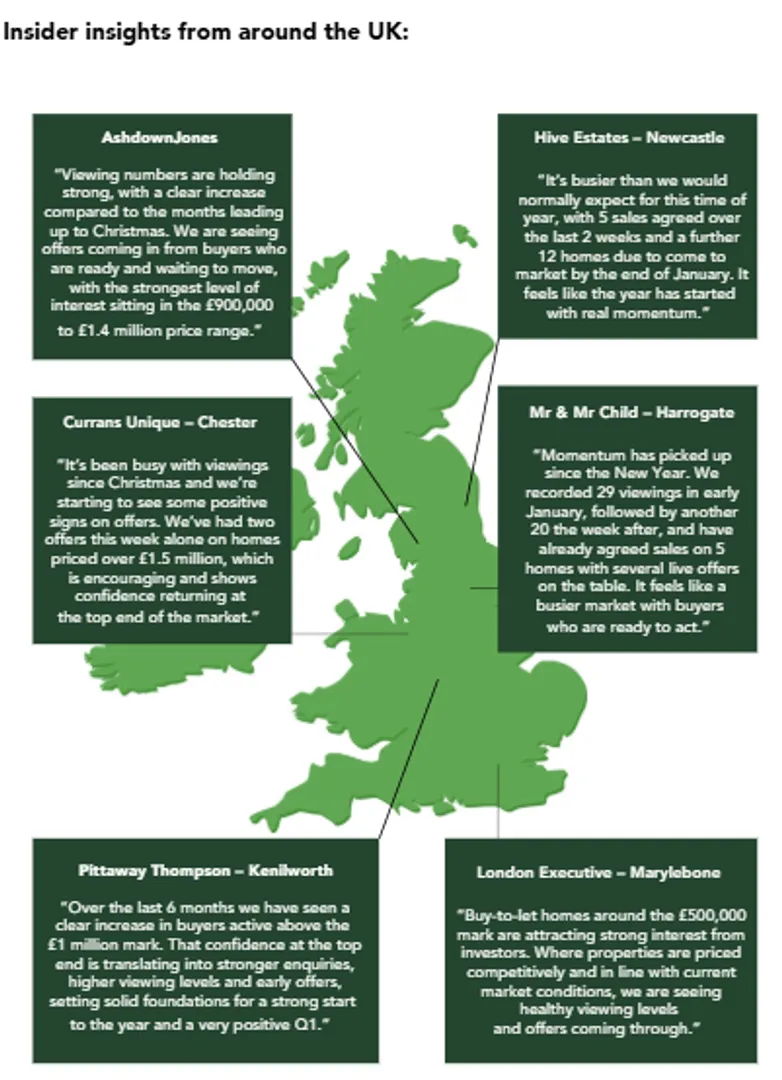
Insider insights from around the UK
And much, much more…
Grab yourself your favourite hot drink and a biscuit, find your favourite seat in the house, and let’s get into it.
November Budget: what happened and the likely impact
Let’s be honest, the November Budget was a bit of a damp squib.
There was plenty of noise and headlines beforehand, but when it finally landed, very little of immediate impact came out. In short, the market paused through Q3 and Q4 2025…for nothing.
Here’s what matters for homeowners, especially those in the high value bracket:
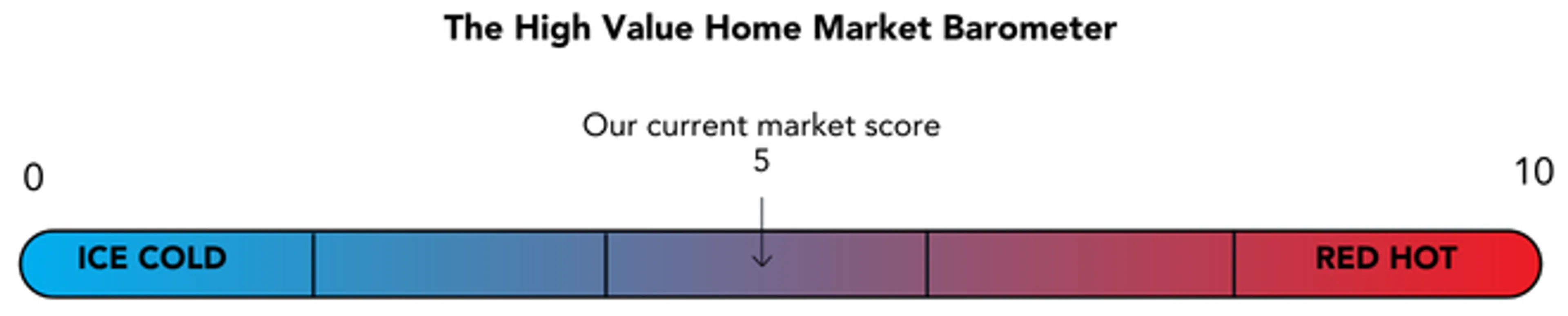
The High Value Home Market Barometer
1. High value Council Tax Surcharge (the so called “mansion tax”)
What was announced:
From April 2028, properties in England worth £2 million or more will pay an additional annual charge ontop of regular council tax.
How it’s structured:
£2,500 per year — £2m to £2.5m
£3,500 per year — £2.5m to £3.5m
£5,000 per year — £3.5m to £5m
£7,500 per year — £5m+
When it starts:
Officially April 2028.
Valuations to determine who pays will be based on up to date figures from April 2026.
What this means for the high value market:
This is the biggest direct property tax change in the Budget, and while it’s not immediate, it adds a recurring cost to owning expensive homes. Buyers and sellers will start factoring a £2,500–£7,500 per year charge into their decisions. When you’re dealing with 7 figure homes, that might seem a modest sum, but it still adds friction to transactions and could temper demand in the top tier over the coming years.
But how do they plan to value all these properties before April 2028, and who does it? Is it one person’s opinion? Valuing a unique home is never an exact science, so owners will constantly be challenging the valuations. I would! I’d be amazed if this happens by April 2028, or even before the next general election.
2. No Changes to Stamp Duty Land Tax (SDLT)
What was announced:
There were no changes to SDLT, meaning no higher rates or removal of current bands.
What this means:
This is significant because there had been strong rumours before the Budget about reform, with pressures coming from the Tories, who suggested they’d scrap the duty completely. One for another day, I think.
3. Property Income Tax – Up 2%
What was announced:
From April 2027, income from all property (for example, rental profits) will be taxed at higher rates:
Basic rate 20% to 22%
Higher rate 40% to 42%
Additional rate 45% to 47%
What it means:
For investors and landlords in high value markets, this means higher tax bills on rental income, which may in turn push some owners to reconsider their portfolios, pass costs on via higher rents or adjust pricing expectations in areas where yields are tight.
4. Frozen Tax Thresholds & Wider Tax Changes
What was announced:
Key income tax and national insurance thresholds remain frozen until April 2031. These aren’t directly property taxes, but will effectively push more income into higher tax bands over time (a phenomenon known as “fiscal drag”).
What it means:
Owners of high value homes often have complex incomes. Whilst not strictly a property tax, this change nevertheless reduces disposable income over time, which in turn dampens buyer confidence and spending power, something that can subtly feed into housing demand and pricing.
The bottom line: no major changes, which is broadly positive for the property market, with only a modest impact.
The Early Market Trends in 2026
2026. The year of the horse. Here’s hoping for a ‘stable’ market.
Just me? Ok…
2026 has started strongly. In January, viewings were up compared to January 2025, with offers rising by a similar amount. Many buyers are in a proceedable position, which is a very positive signal for the market. Even after allowing for a quieter January in 2025, the uplift in activity this year is meaningful.
As we saw for much of last year, however, the majority of these viewings and offers are for homes under £1.25 million.
Normally, we would expect this wave of buyers and momentum to extend up the price points – and we hope that will be the case. We do need to proceed with a little caution though; last year, the market’s energy seemed to taper off before it reached the top 5% priced homes. It’s one to keep an eye on at the moment.
Crystal Ball Predictions
With a strong start to the year, no obvious political blockers in the way (apart from Trump, but hopefully any impact on the UK economy will be negligible), a backlog of high-value buyers following a quieter 18 months and improving sentiment from lenders, there’s plenty to be optimistic about.
If you’re thinking about marketing your home in 2026, here are my recommendations, dependent on your price bracket:
Home Value | Q1 | Q2 | Q3 | Q4 |
|---|---|---|---|---|
£500k – £1million | 🟢 | 🟢 | 🟢 | 🟢 |
£1million – £1.25m | 🟠 | 🟢 | 🟠 | 🟢 |
£1.25m – £2m | 🟠 | 🟢 | 🟠 | 🟢 |
£2m – £3.5m | 🔴 | 🟠 | 🟢 | 🟢 |
£3.5m+ | 🟠 | 🟢 | 🟠 | 🟢 |
Green 🟢 – Strong market. High confidence that properties are selling, making this a great time to put your home on the market in 2026.
Amber 🟠 – Slower movement. Finding a buyer may take a little longer, but if the property is marketed and priced correctly, there should still be solid interest.
Red 🔴 – Caution. This isn’t the ideal time to sell your home. Consider starting conversations or exploring off-market options, but waiting for a stronger market may be the better choice. These recommendations are based on historical data, current market conditions and our forecasts. For a true understanding of your specific property’s value, marketing potential and unique strategy, nothing beats an in-person conversation, so we understand the nuances and finer points of your situation.
Interest Rates and the Mortgage Market
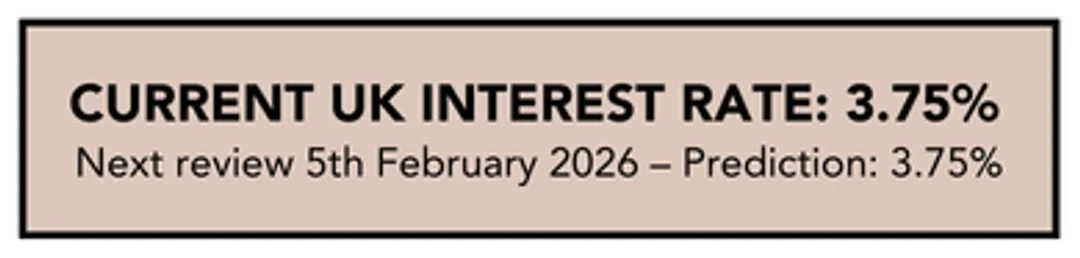
Interest rates are falling, and should continue to fall through 2026, with many predicting they could fall as low as 3% by November.
For owners of higher-value homes, this is significant, as even small movements in interest rates can have a major impact on affordability at the upper end of the market. Lower borrowing costs typically unlock demand from ‘lifestyle movers’, second-home buyers and downsizers with larger budgets, helping to stimulate activity and support price stability in premium locations such as the Lake District.
For those considering a move, this improving mortgage environment could create a strong window of opportunity in 2026.
‘Mortgage Market Showing Strong Signs of Improvement’
Competition between lenders is continuing to increase, and many brokers now expect further mortgage rate reductions in the coming weeks. Lenders have also begun to ease affordability criteria, particularly for first-time buyers, which is helping to bring more people back into the market and improve overall confidence – critical for all price points.
Whilst mortgage rates have already fallen over the past year, wider economic and global uncertainty means progress may not be completely smooth. Some homeowners will also still feel a financial impact as cheaper legacy fixed-rate mortgage deals are yet to end.
From our experience, it usually takes around 18 months for an interest rate reduction to have a real impact on an economy.
Company No: 10685103 | VAT Number: 2649657564
What’s Next?
If this update leaves you with questions about your home and plans, let’s talk. A chat over a cup of tea (preferably Yorkshire) is our favourite way of getting to know you and your home, and discovering your exciting plans.
I know you might be thinking that you’d be wasting our time, especially if you have no immediate plans. But we’d welcome a conversation, before you decide to market your home. It’s our job – and privileged responsibility – to help the owners of high-value homes in Oxfordshire &
Buckinghamshire areas to make informed decisions, whether you’re planning on selling now, in 3 years’ time, or even beyond.
3 ways you can arrange a conversation or a home visit with us:
1. Email me direct on [email protected]
2. Text or WhatsApp me on 07833 246456
3. Call the team on 01844 399292
If we don’t hear from you in the next couple of months,
we’ll catch up again in Q2, when everything will be a
little bit greener and, hopefully, a little less chilly.
Warmly,
Darren Hunt MNAEA Proud
Founder of College and County
Sales ltd